Additional Resources
Florida Agriculture in the Classroom
Link Library - Florida Agriculture in the Classroom
Florida Cattlemen's Association
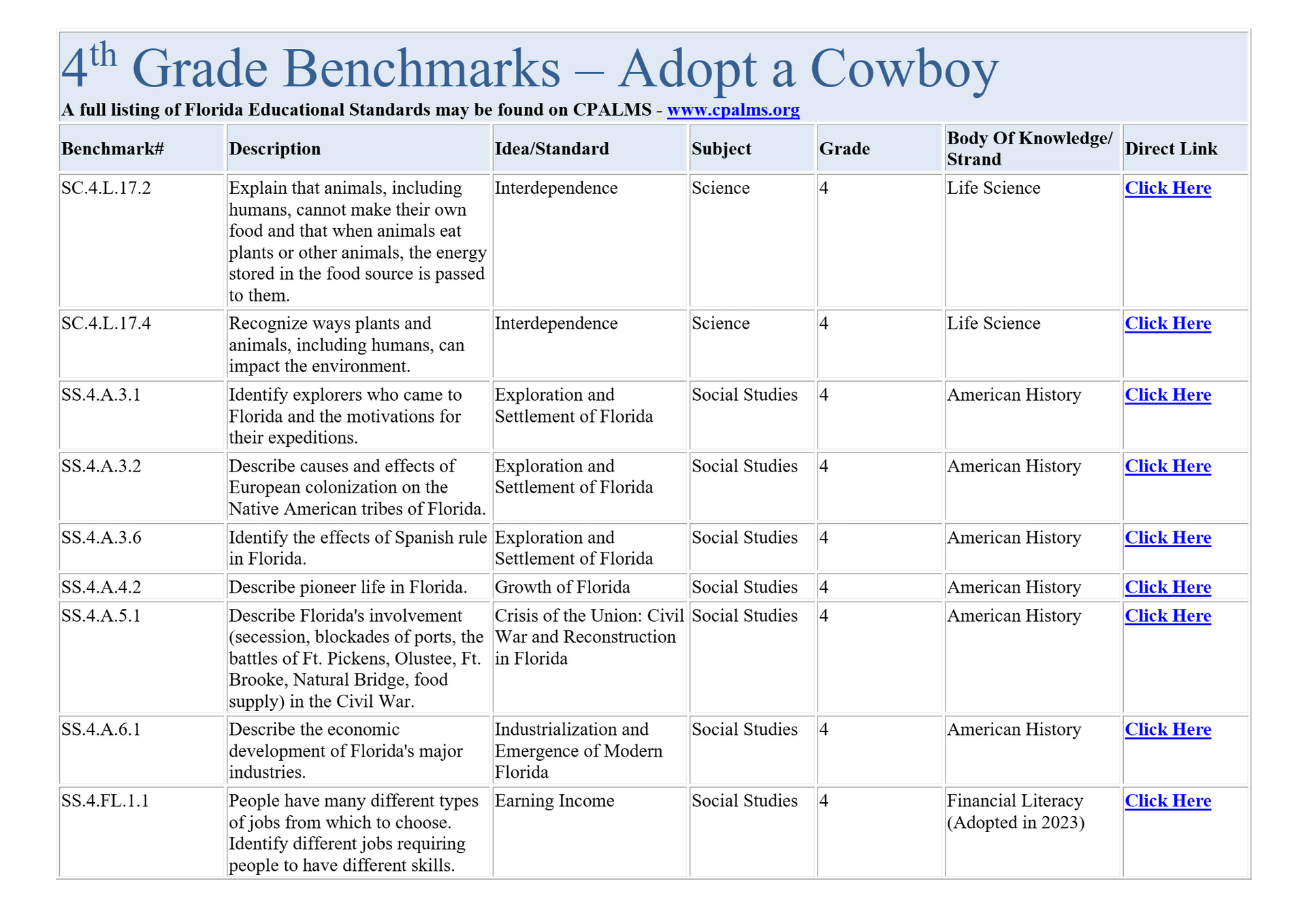
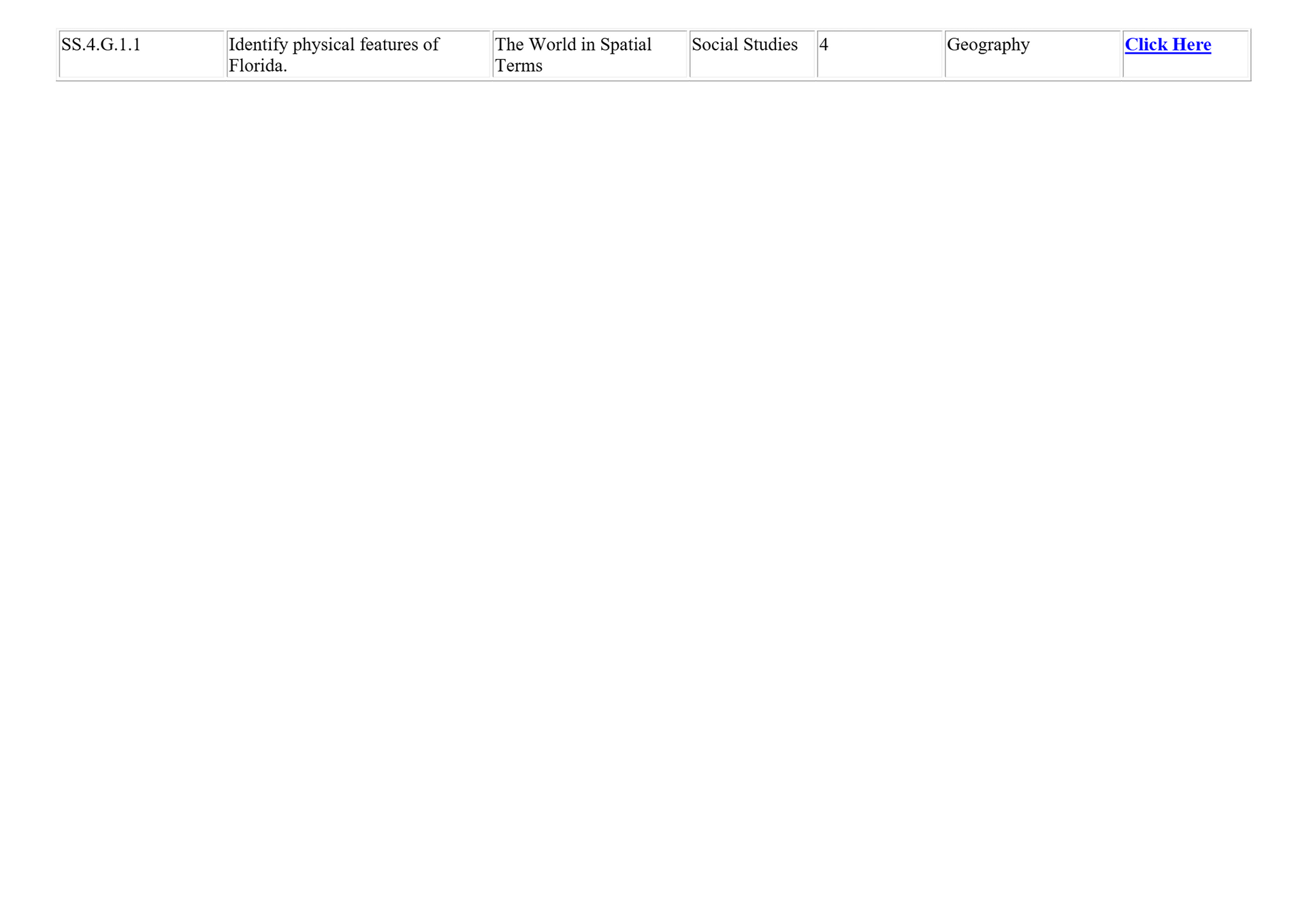
4th Grade Benchmarks
Additional Resources
Objective 1
At least 75% of responding teachers will report an increase in student knowledge of at least two aspects of Florida’s beef cattle industry and/or its importance to the state of Florida as measured by survey.
Some Examples of Concepts/Topics:
- The history of cattle ranching in Florida
- The first cattle were brought to the continental US by the early Spanish explorer, Juan Ponce De Leon in 1521. (SC.4.A.3.1)
- The first settlers in Florida were Spanish missionaries who introduced Native Americans to cattle ranching. Today, the Seminole Tribe of Florida has one of the largest cow/calf herds in the nation (SS.4.A.3.2)
- Much of how cattle are raised today is similar to the ways of early Florida pioneers with the tools we use (dogs, horses, whips) (SS 4.A. 4.2)
- The day to day activities/tools/skills of a Florida Cowboy (SS .4.FL.1.1)
- Florida’s physical features (woods, swamps, pastures, scrubs, etc) that can be found on ranchlands (SS .4.G.1.1)
- The environmental benefits of ranchlands (SS. 4.L.17.4)
- Native plant and animal populations that thrive on ranchlands
- Carbon sequestration
- Aquifer recharge
- Reducing surface runoff and erosion
- Reducing greenhouse gas emissions
- Land conservation
- Cattle provide meat and by-products
- Cattle convert plant material to energy and protein that is a food source for people and other animals (SC .4.L.17.2)
Objective 2
At least 75% of responding teachers will report positive changes in attitudes of students of at least two aspects of Florida’s beef cattle industry and/or its importance to the state of Florida as measured by survey.
Some Examples of Attitudes
- Interest in becoming a Florida rancher
- Favorable attitude toward Florida cattle ranchers
- Expressed appreciation of the environmental benefits that ranchlands provide
- Expressed appreciation for meat and by-products provided by beef cattle
- Appreciation of the aesthetics or cultural values of Florida ranchers/ranches
- Changes in attitudes toward raising cattle
- Perception of ranchers as environmental stewards
- Believe that it's important to conserve and protect ranchlands
- Others
Objective 3
At least 45% of responding teachers will report themselves and/or students adopting at least one new practice that supports Florida cattle ranching as measured by follow-up survey.
Some Examples of Actions/Practices
- Novel introduction to cowboy/horse/etc.
- Sharing information learned with others
- Using information for decision making
- Encouraging students to explore/pursue careers in agriculture
- Students exploring or pursuing careers and/or activities in agriculture
- Advocating for keeping land in cattle production in Florida